
Introduction
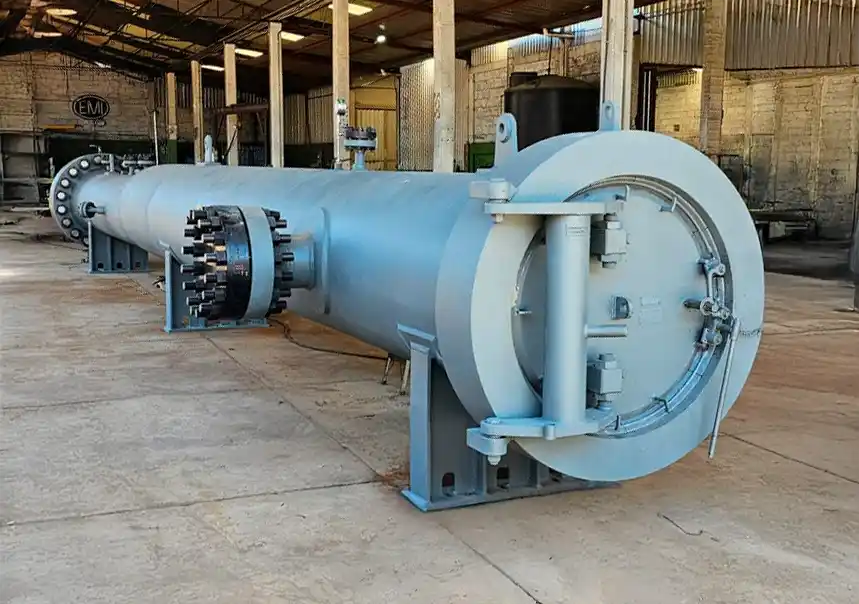
Pig traps—internationally known as pig launchers and pig receivers—are essential facilities in pipeline transportation systems. Their main function is to enable the safe insertion, retrieval, and handling of internal cleaning or inspection devices, commonly referred to as “pigs.”
These devices are used for various operational and maintenance activities, such as:
• internal pipeline cleaning
• product separation
• intelligent inspection (intelligent pigging)
• removal of liquid or sediment accumulations
Main Components
A typical pigging station includes several elements designed to ensure operational safety and ease of maintenance.
a) Barrel or launching chamber
This is the vessel where the pig is placed before launching or where it is received at the end of its run. It is generally designed with a larger diameter than the pipeline to facilitate handling of the device.
b) Eccentric reducer
Allows the transition between the barrel diameter and the main pipeline diameter, facilitating the passage of the pig into the pipeline.
c) Barred Tee or launching tee
A special component designed to allow smooth passage of the pig from the barrel into the pipeline. Its geometry prevents the device from getting stuck in the branch.
d) Isolation valves
Used to isolate the barrel during pig loading or unloading operations. These valves allow:
• stopping flow դեպի the barrel
• maintaining pressure in the main pipeline
• performing safe operations
e) Vent system
Allows pressure to be released from the barrel before opening the quick-opening closure. It is a critical safety element to prevent sudden pressure release.
f) Drain system
Used to remove accumulated liquids داخل the barrel before performing maintenance or pig removal operations.
g) Quick-opening closure
An access mechanism designed to allow safe and efficient opening of the barrel. It must include safety systems that prevent opening while the equipment is pressurized.
Design Considerations
The design of pig traps must consider various operational and mechanical aspects.
i. Design pressure
The barrel must be designed to withstand the maximum operating pressure of the pipeline, including safety margins defined by applicable codes.
ii. Barrel diameter
Typically, a diameter larger than the main pipeline is selected to facilitate pig handling.
This allows:
• insertion of intelligent inspection devices
• removal of larger cleaning tools
iii. Barrel length
It must be sufficient to accommodate the longest pig to be used in pipeline operations.
iv. Operational safety
The design must include:
• vent and drain valves
• pressure indicators
• closure locking systems
• safety signage
Conclusion
In hydrocarbon and natural gas transportation projects, the incorporation of properly designed pigging stations not only facilitates pipeline maintenance, but also significantly contributes to integrity management, operational reliability, and the extension of infrastructure service life.
References
ASME B31.8 — Gas Transmission and Distribution Piping Systems
ASME B31.4 — Pipeline Transportation Systems for Liquids and Slurries
API 14E — Design and Installation of Offshore Production Platform Piping Systems
API 6D — Pipeline and Piping Valves
Contact Us
If you require support for engineering development, design, evaluation, or regulatory compliance in facilities equipped with pig launcher and receiver systems for pipeline cleaning and inspection, feel free to contact us.