
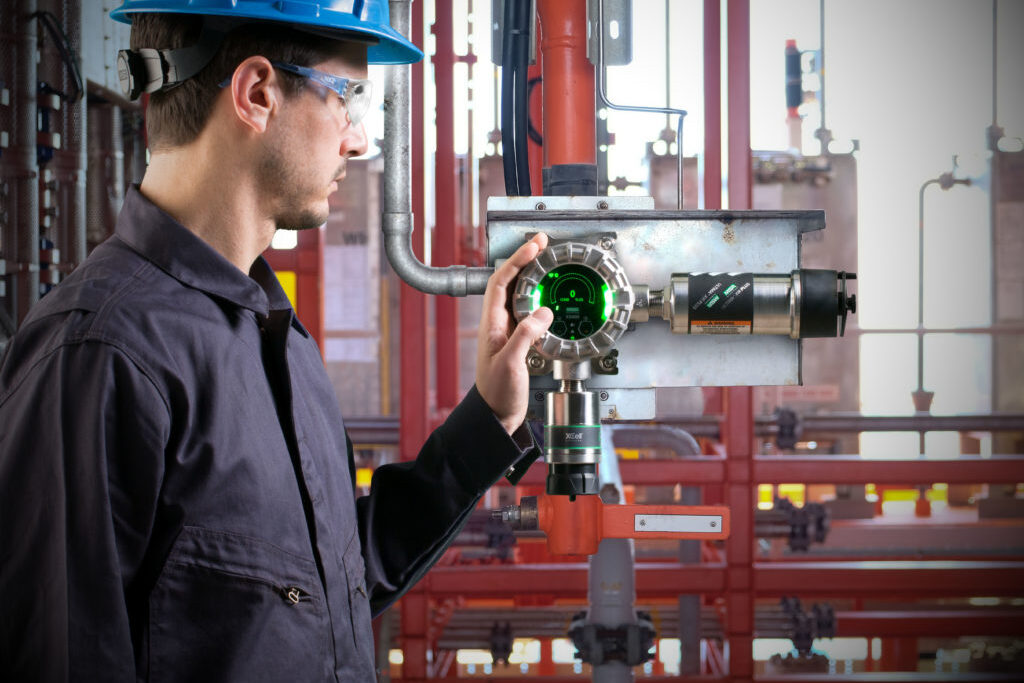
Introduction
In industrial facilities where hydrocarbons, combustible gases, or toxic substances are handled, early gas leak detection is a fundamental element for preventing fires, explosions, and risks to personnel. Gas detection systems make it possible to identify hazardous gas concentrations before they reach levels that could create unsafe conditions within the facility.
These systems are widely used in industries such as oil and gas, petrochemical plants, processing facilities, compression stations, storage terminals, and power generation plants. Their main objective is to detect the presence of dangerous gases and activate alarms or mitigation systems that allow corrective actions to be taken immediately.
Types of Gas Detectors
There are different detection technologies selected depending on the type of gas to be monitored and the process conditions.
Catalytic detectors. These are mainly used to detect combustible gases. They operate by measuring the heat generated from the oxidation of the gas on a catalytic sensor, which allows the gas concentration in the environment to be determined.
Infrared (IR) detectors. These detect gases through the absorption of infrared radiation at specific wavelengths. They are widely used in the oil and gas industry due to their high stability and lower susceptibility to contaminants.
Electrochemical detectors. These are primarily used to detect toxic gases such as carbon monoxide, hydrogen sulfide, or ammonia. These sensors generate an electrical signal proportional to the concentration of the gas present.
Detector Placement
Proper placement of detectors is one of the most important aspects in system design. The following factors must be evaluated:
• potential leak points in equipment and piping
• gas density relative to air
• natural or forced ventilation
• facility layout
• classified (hazardous) areas
For example, gases heavier than air tend to accumulate near the ground, while lighter gases tend to rise. For this reason, detector positioning must consider the physical behavior of the gas.
Integration with Safety Systems
Gas detectors are typically integrated with control systems or alarm panels that enable the activation of different safety actions, such as:
• visual and audible alarms
• equipment shutdown
• automatic valve closure
• activation of ventilation systems
• activation of fire protection systems
In critical facilities, gas detection systems can be integrated with Safety Instrumented Systems (SIS) or Distributed Control Systems (DCS) to enhance the response to hazardous conditions.
Conclusion
Gas detection systems represent a fundamental layer of protection in industrial facilities where there is a risk of hazardous gas release. Their proper selection, placement, and integration with safety systems enable early leak detection, significantly reducing the likelihood of fires, explosions, or toxic exposures.
Compliance with standards such as NFPA 72 and IEC 60079 ensures that these systems are designed and installed according to recognized industrial safety standards, contributing to personnel protection, operational continuity, and the integrity of industrial assets.
References
• NFPA 72 — National Fire Alarm and Signaling Code
• IEC 60079 — Equipment for Explosive Atmospheres
• IEC 61511 — Safety Instrumented Systems for the Process Industry
• IEC 61508 — Functional Safety of Electrical/Electronic/Programmable Electronic Systems
• ISA 84 — Safety Instrumented Systems for the Process Industry
• ISA 18.2 — Alarm Management in Control Systems
• API RP 754 — Process Safety Performance Indicators
• API RP 750 — Management of Process Hazards
Contact Us
Contact us — we’re here to help.
Visit our Applied Engineering Solutions section to learn how at FS Engineering & Consulting we integrate fire and gas detection systems with low-expansion foam fire suppression systems.